Mostrando postagens com marcador Literatura Norte-americana. Mostrar todas as postagens

terça-feira, novembro 10, 2009

PHILIP ROTH: Indignation


"I never heard that said about me before, sir", said I at the very instant I inwardly sang out the most beautiful word in English language: Indig-na-tion!". I suddenly wondered what it was in Chinese. I want to learn it and go around the campus shouting it at the top of my lungs"


Vintage, 2008, p.95


Neste romance, Philip Roth surpreende críticos e leitores com uma história que escapa completamente à temática de seus últimos trabalhos, como Homem comum e o Fantasma sai de cena, que versavam sem meios tons sobre o fim da vida e suas mazelas físicas e espirituais. O que temos agora é a experiência iniciática de um jovem de dezoito anos, Marcus Messner, nascido e criado em Newark, Nova Jersey, esbanjando vigor, ambição, ousadia e desejos irrefreáveis ao ingressar na vida adulta.Filho único de um açougueiro kosher superprotetor, Messner busca uma faculdade do Meio-Oeste americano, bem longe de casa, o que lhe permite escapar da sufocante vigilância do pai, da medíocre universidade local onde cursara o primeiro ano e de suas funções como ajudante no açougue. Corre o ano de 1951, e os Estados Unidos enfrentam uma guerra cruenta na Coreia, conflito que paira como ameaça letal sobre o agora segundanista de direito em risco de ser convocado para lutar no front, caso não consiga se destacar nos estudos acadêmicos e no curso para o oficialato. Furtando-se, pois, a vícios, prazeres e uma vida social universitária, o personagem-narrador se entrega aos estudos de forma a jamais tirar menos que 10 em todas as matérias.Entretanto, um poderoso obstáculo se interpõe nos planos de Messner: seu próprio temperamento, irredutível a convenções hipócritas, como assistir a preleções obrigatórias sobre a Bíblia na igreja evangélica do campus e participar do mundinho das fraternidades. Isso sem contar a irrupção anárquica do sexo e do amor em sua vida, na figura tão adorável quanto enigmática de sua colega de classe Olivia Hutton.Indignação demonstra com sutil maestria as vias insuspeitas que conduzem eventos e escolhas aparentemente banais na vida de um jovem a resultados de uma gravidade desproporcional. Roth exibe neste romance curto, mas de enorme densidade humana, social, política e literária, um inconformismo explosivo de adolescente em busca de seus próprios caminhos na vida, alguns dos quais poderão incitar a ira vingativa de uma sociedade conservadora gerida por mentes tacanhas.


fonte http://www.meiapalavra.com.br/showthread.php?tid=3145

domingo, novembro 08, 2009

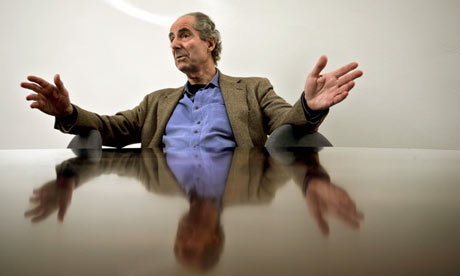
After Philip Roth, where next?


Guardian Books


It's sobering to think about how small the world of American letters will look without him


He's just published a new novel, and another is finished and due for publication next year, but the memorialisation of Philip Roth has already begun. The towering American novelist has recently had his works published by the Library of America, giving him an immortal status usually reserved for dead authors. At age 76, his birthdays are now "commemorated" rather than celebrated, with his achievements discussed by awestruck admirers. And Roth himself has been batting off curious journalists probing into his recent meditations on death in The Dying Animal, Everyman and Exit Ghost – are these novels an attempt to come to terms with his own mortality, they ask?But in a sense, those aren't the most interesting questions. Many writers turn instinctively in their later years to the bewilderments of old age. Among Roth's contemporaries, Saul Bellow dealt with the humiliations of dying in his final novel Ravelstein; while John Updike's Seek My Face was as much concerned with ageing as art history. In Roth's case, this shift resulted in one of his best novels. Devoid of the humour which usually leavens his narrators, the stripped down and deadly serious voice in Everyman was dense, lyrical and overwhelmingly powerful.
And this points to the more urgent question that will crop up increasingly in coming years. Despite Roth wanting to have them all shot, critics will be asking: can we imagine a world without Roth? "I can't see an American writer coming along who is replacing Roth," says Jay Prosser, who teaches American literature at the University of Leeds. "He writes with his ear – his novels are completely driven by his voice." There is a singularity of voice in Roth's work which is hard to find elsewhere. The current crop of high-profile American writers – such as Dave Eggers, Jonathan Safran Foer and the late David Foster Wallace – have raised technicality to an art form, but it would be hard to argue that they drive their novels home with the same ferocious intensity.
And a piece of American history will also fall into the sea when Roth goes. Now the last one standing from the big-hitting male American writers who shot to fame alongside him, Roth came of age when writing the Great American Novel was still an embodiment of the American dream. Tom Wolfe wrote in 1972 that the novel was "one of the last of those superstrokes, like finding gold, through which an American could, overnight, utterly tranform his destiny".
Now that novels have to compete in the attention economy along with everything else, younger American writers have found themselves emerging on lower pedestals. David Foster Wallace argued in the 1990s that American fiction writers under 40 operate in a media-saturated realm which separates them from the likes of Roth, Updike and Bellow. It could well be that American novelists never again achieve the same level of mythology as Roth.

domingo, setembro 13, 2009

HENRY JAMES: O Retrato de uma Senhora-


RALPH TOUCHETT


"Uma reserva de indiferença- como uma grossa fatia de bolo que uma babá antiga e afetuosa tivesse escondido em sua primeira pasta escolar-veio em seu auxilio e ajudou-o a aceitar o sacrificio , pois, na melhor das hipóteses , estava demasiado doente para qualquer coisa que não fosse esse árduo jogo. Como disse a si mesmo, não havia realmente nada que quisesse muito fazer, de modo que ao menos não renunciara ao campo de batalha. Entretanto, no momento, a frangrância do fruto proibido parecia, de vez em quando, flutuar por perto e lembrar-lhe de que o melhor dos prazeres é impeto da ação. Viver como vivia era como ler um livro bom numa tradução ruim- parca diversão para um jovem que talvez esperasse um dia se tornar um excelente linguista" p. 63