
Mostrando postagens com marcador Reedemer Church. Mostrar todas as postagens
Mostrando postagens com marcador Reedemer Church. Mostrar todas as postagens
quarta-feira, fevereiro 18, 2009


sábado, março 15, 2008
A Supremacia de Cristo
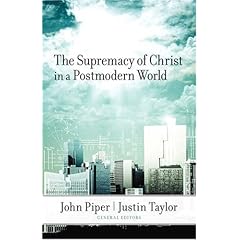
Recentemente a CPAD publicou um dos melhores livros de sua história, trata-se de A SUPREMACIA DE CRISTO EM MUNDO PÓS-MODERNO, que contêm textos da Conferência Desiring God de 2006, organizados por John Piper e Justin Taylor.
O livro/resumo da conferência contêm a participação de: David Wells, Don Carson, Tim Keller, Mark Driscoll, Voddie Baucham, and John Piper.
Em inglês, é possível o download tanto do audio e video quanto do livro.
Os dois últimos capítulos são reservados aos pastores emergente-reformados Tim Keller e Mark Driscoll, sobre a Teologização e contextatualização do Evangelho, ou seja, a mão na massa.
Tim Keller diz em " O Evangelho e a Supremaciade Cristo em um Mundo pós-moderno":
"A religião opera segundo o princípio: Eu vou obedecer, por isso, sou aceito (por Deus). O evangelho opera segundo outro princípio: Eu sou aceito, por meio da preciosa graça de Deus, por isso,vou obedecer. Duas pessoas vivendo nesses dois princípios podem sentar uma do lado da outra na igreja, domingo, tentando fazer as mesmas coisas- ler a Bíblia, obedecer aos dez mandamentos, ser ativo na Casa de Deus, e orar- mas por duas motivações complementamente diferentes. A religião motiva a pessoa a fazer o que faz por medo, insegurançae virtuosismo, mas o evangelhoo a motiva a fazer o que faz, por alegria e gratidão aquEle que que é o próprio Deus" (p. 121)
"Correndo o risco de simplificar demais, vou apresentar quatro estágios pelos quais o povo deve passar, da completa ignorância do evangelho e do cristianismo até a aceitação completa. Eu os chamo de:
O livro/resumo da conferência contêm a participação de: David Wells, Don Carson, Tim Keller, Mark Driscoll, Voddie Baucham, and John Piper.
Em inglês, é possível o download tanto do audio e video quanto do livro.
Os dois últimos capítulos são reservados aos pastores emergente-reformados Tim Keller e Mark Driscoll, sobre a Teologização e contextatualização do Evangelho, ou seja, a mão na massa.
Tim Keller diz em " O Evangelho e a Supremaciade Cristo em um Mundo pós-moderno":
"A religião opera segundo o princípio: Eu vou obedecer, por isso, sou aceito (por Deus). O evangelho opera segundo outro princípio: Eu sou aceito, por meio da preciosa graça de Deus, por isso,vou obedecer. Duas pessoas vivendo nesses dois princípios podem sentar uma do lado da outra na igreja, domingo, tentando fazer as mesmas coisas- ler a Bíblia, obedecer aos dez mandamentos, ser ativo na Casa de Deus, e orar- mas por duas motivações complementamente diferentes. A religião motiva a pessoa a fazer o que faz por medo, insegurançae virtuosismo, mas o evangelhoo a motiva a fazer o que faz, por alegria e gratidão aquEle que que é o próprio Deus" (p. 121)
"Correndo o risco de simplificar demais, vou apresentar quatro estágios pelos quais o povo deve passar, da completa ignorância do evangelho e do cristianismo até a aceitação completa. Eu os chamo de:
- inteligibilidade
- credibilidade
- plausabilidade
- intimidade
sábado, novembro 03, 2007
Tim Keller na Preaching Today
One Minute One-on-One
Preaching Today: Could you tell us a bit about your planning process for preaching?
Tim Keller: Every June I flesh out all of my sermon topics, titles, and texts for the coming year, and then I send them off to my music director and other associate preachers. During vacation and study time in the summer, I read books on the themes I'll be treating in the sermons during the coming year. At the end of the summer, my reading leads me to revise the list of topics and texts, and then we are good to go!
Tell us about your weekly preparation process.
Ten days before the Sunday I will preach a given sermon, I spend three hours doing basic exegesis and outlining. The Friday morning before I preach the sermon, I spend five hours writing a first draft of the sermon. On Saturday morning I spend four hours writing a second draft. That Saturday night I spend another two to three hours writing a third draft. With each draft I shorten and streamline the message. I then get up very early on Sunday morning and spend two hours reading it through several times, essentially memorizing all the basic points and sub-points.
I pastor a large church and have a large staff, so I give special prominence to preparing the sermon. I give it 15–18 hours a week. I would not advise younger ministers to spend that much time on sermon preparation, however. The main way to become a good preacher is to preach a lot and to spend tons of time in people work. That's how you become something more than a Bible commentator; you become a flesh–and–blood preacher. When I was without a large staff, I spent 6–8 hours in sermon preparation.
Which tools do you find most helpful in the preparation process?
I use BibleWorks software and lots of commentaries.
What advice can you offer to other preachers?
Preaching should be biblical, clear for the mind, practical for the will, vivid for the heart, warm, forceful, and Christocentric. You should always preach Christ and the gospel from every text!
How do you generate sermon ideas?
It's a great mistake to pit pastoral care and leadership against preaching preparation. Many of my preaching ideas come to me as I am talking to, exhorting, counseling, evangelizing, and shepherding people. It is only through working with people that you become the preacher you need to be—someone who knows sin, how the heart works, what people's struggles are, and so on. To some degree, pastoral care and leadership are sermon preparation! They prepare the preacher and not just the sermon.
Finally, what devotional material do you use for your personal growth?
I use a version of M'Cheyne's reading calendar, reading the Bible in its entirety every year. I also follow the traditional daily office, and I read and pray all the Psalms every month. I use older versions of the Book of Common Prayer for many of my prayers.
Preaching Today: Could you tell us a bit about your planning process for preaching?
Tim Keller: Every June I flesh out all of my sermon topics, titles, and texts for the coming year, and then I send them off to my music director and other associate preachers. During vacation and study time in the summer, I read books on the themes I'll be treating in the sermons during the coming year. At the end of the summer, my reading leads me to revise the list of topics and texts, and then we are good to go!
Tell us about your weekly preparation process.
Ten days before the Sunday I will preach a given sermon, I spend three hours doing basic exegesis and outlining. The Friday morning before I preach the sermon, I spend five hours writing a first draft of the sermon. On Saturday morning I spend four hours writing a second draft. That Saturday night I spend another two to three hours writing a third draft. With each draft I shorten and streamline the message. I then get up very early on Sunday morning and spend two hours reading it through several times, essentially memorizing all the basic points and sub-points.
I pastor a large church and have a large staff, so I give special prominence to preparing the sermon. I give it 15–18 hours a week. I would not advise younger ministers to spend that much time on sermon preparation, however. The main way to become a good preacher is to preach a lot and to spend tons of time in people work. That's how you become something more than a Bible commentator; you become a flesh–and–blood preacher. When I was without a large staff, I spent 6–8 hours in sermon preparation.
Which tools do you find most helpful in the preparation process?
I use BibleWorks software and lots of commentaries.
What advice can you offer to other preachers?
Preaching should be biblical, clear for the mind, practical for the will, vivid for the heart, warm, forceful, and Christocentric. You should always preach Christ and the gospel from every text!
How do you generate sermon ideas?
It's a great mistake to pit pastoral care and leadership against preaching preparation. Many of my preaching ideas come to me as I am talking to, exhorting, counseling, evangelizing, and shepherding people. It is only through working with people that you become the preacher you need to be—someone who knows sin, how the heart works, what people's struggles are, and so on. To some degree, pastoral care and leadership are sermon preparation! They prepare the preacher and not just the sermon.
Finally, what devotional material do you use for your personal growth?
I use a version of M'Cheyne's reading calendar, reading the Bible in its entirety every year. I also follow the traditional daily office, and I read and pray all the Psalms every month. I use older versions of the Book of Common Prayer for many of my prayers.
Assinar:
Postagens (Atom)