
Mostrando postagens com marcador Doutrinas Bíblicas. Mostrar todas as postagens
Mostrando postagens com marcador Doutrinas Bíblicas. Mostrar todas as postagens
domingo, março 14, 2010


domingo, junho 28, 2009
The Justification Debate: A Primer

The Justification Debate: A Primer
Two of the world's most prominent pastor-theologians on justification—and what difference it makes.
John Piper and N.T. Wright, compiled by Trevin Wax posted 6/26/2009 09:54AM
Two of the world's most prominent pastor-theologians on justification—and what difference it makes.
John Piper and N.T. Wright, compiled by Trevin Wax posted 6/26/2009 09:54AM
.
Since Christianity Today's August 2007 cover story, "What Did Paul Really Mean?" Piper and Wright have taken the debate on justification from the academy to the masses. Here is where the two evangelicals differ. Download a PDF of this article here.
.
.
The Problem
Piper: God created a good world that was subjected to futility because of the sinful, treasonous choice of the first human beings. Because of this offense against the glory of God, humans are alienated from their Creator and deserve his just condemnation for their sins.
Wright: God created a good world, designed to be looked after and brought to its intended purpose through his image-bearing human beings. This purpose was thwarted by the sinful choice of the first human beings. Because of human sinfulness, the world needs to be put to rights again and its original purpose taken forward to completion. God's purpose in putting humans "right" is that through them, the world can be put to rights.
Piper: God created a good world that was subjected to futility because of the sinful, treasonous choice of the first human beings. Because of this offense against the glory of God, humans are alienated from their Creator and deserve his just condemnation for their sins.
Wright: God created a good world, designed to be looked after and brought to its intended purpose through his image-bearing human beings. This purpose was thwarted by the sinful choice of the first human beings. Because of human sinfulness, the world needs to be put to rights again and its original purpose taken forward to completion. God's purpose in putting humans "right" is that through them, the world can be put to rights.
.
The Law
Piper: God revealed himself through the Law, which pointed to Christ as its end and goal, commanded the obedience that comes from faith, increased transgressions, and shut the mouths of all humans because no one has performed the righteousness of the Law so as not to need a substitute.
Wright: God made a covenant with Abraham in order to set in motion his plan to rescue his world through Abraham's family. God gave his people the Torah, his holy Law, as a pedagogue—a way to keep Israel, God's wayward people, from going totally off track until the coming of the Messiah. Israel was supposed to embody the law and thus be a light to the nations. But Israel has failed at this task.
Piper: God revealed himself through the Law, which pointed to Christ as its end and goal, commanded the obedience that comes from faith, increased transgressions, and shut the mouths of all humans because no one has performed the righteousness of the Law so as not to need a substitute.
Wright: God made a covenant with Abraham in order to set in motion his plan to rescue his world through Abraham's family. God gave his people the Torah, his holy Law, as a pedagogue—a way to keep Israel, God's wayward people, from going totally off track until the coming of the Messiah. Israel was supposed to embody the law and thus be a light to the nations. But Israel has failed at this task.
.
God's Righteousness
Piper: The essence of God's righteousness is his unwavering faithfulness to uphold the glory of his name in all he does. No single action, like covenant keeping, is God's righteousness. For all his acts are done in righteousness. The essence of human righteousness is the unwavering faithfulness to uphold the glory of God in all we do. The problem is that we all fall short of this glory; that is, no one is righteous.
Wright: God's righteousness refers to his own faithfulness to the covenant he made with Abraham. Israel has been unfaithful to this commission. What is now required, if the world's sin is to be dealt with and a worldwide family created for Abraham, is a faithful Israelite who can be faithful to the covenant in Israel's stead.
Piper: The essence of God's righteousness is his unwavering faithfulness to uphold the glory of his name in all he does. No single action, like covenant keeping, is God's righteousness. For all his acts are done in righteousness. The essence of human righteousness is the unwavering faithfulness to uphold the glory of God in all we do. The problem is that we all fall short of this glory; that is, no one is righteous.
Wright: God's righteousness refers to his own faithfulness to the covenant he made with Abraham. Israel has been unfaithful to this commission. What is now required, if the world's sin is to be dealt with and a worldwide family created for Abraham, is a faithful Israelite who can be faithful to the covenant in Israel's stead.
.
First-Century Judaism
Piper: Many Jews in Jesus' day (like the Pharisees described in the Gospels) did not see the need for a substitute in order to be right with God, but sought to establish their own righteousness through "works of the Law." Whether keeping Sabbath or not committing adultery, these works became the basis of one's right standing with God. The inclination to rely on one's own ceremonial and moral acts is universal, apart from divine grace.
Wright: Jews in Jesus' day believed that the Law was given to them as people who were already in covenant with God. Therefore, the Law was not viewed as a way to earn God's favor, but as a sign that one was already in covenant with God. The "works of the Law" are not ways to earn favor with God, but badges of covenant identity by which one determines who is in the covenant and who is not. Many Jews in Paul's day were clinging to these identity markers (Sabbath, circumcision) in a way that made their Jewish identity exclusive. Therefore, their exclusivism was keeping the promise of God from flowing to the nations
Piper: Many Jews in Jesus' day (like the Pharisees described in the Gospels) did not see the need for a substitute in order to be right with God, but sought to establish their own righteousness through "works of the Law." Whether keeping Sabbath or not committing adultery, these works became the basis of one's right standing with God. The inclination to rely on one's own ceremonial and moral acts is universal, apart from divine grace.
Wright: Jews in Jesus' day believed that the Law was given to them as people who were already in covenant with God. Therefore, the Law was not viewed as a way to earn God's favor, but as a sign that one was already in covenant with God. The "works of the Law" are not ways to earn favor with God, but badges of covenant identity by which one determines who is in the covenant and who is not. Many Jews in Paul's day were clinging to these identity markers (Sabbath, circumcision) in a way that made their Jewish identity exclusive. Therefore, their exclusivism was keeping the promise of God from flowing to the nations
.
The Gospel
Piper: The heart of the gospel is the good news that Christ died for our sins and was raised from the dead. What makes this good news is that Christ's death accomplished a perfect righteousness before God and suffered a perfect condemnation from God, both of which are counted as ours through faith alone, so that we have eternal life with God in the new heavens and the new earth.
Wright: The gospel is the royal announcement that the crucified and risen Jesus, who died for our sins and rose again according to the Scriptures, has been enthroned as the true Lord of the world. When this gospel is preached, God calls people to salvation, out of sheer grace, leading them to repentance and faith in Jesus Christ as the risen Lord.
Piper: The heart of the gospel is the good news that Christ died for our sins and was raised from the dead. What makes this good news is that Christ's death accomplished a perfect righteousness before God and suffered a perfect condemnation from God, both of which are counted as ours through faith alone, so that we have eternal life with God in the new heavens and the new earth.
Wright: The gospel is the royal announcement that the crucified and risen Jesus, who died for our sins and rose again according to the Scriptures, has been enthroned as the true Lord of the world. When this gospel is preached, God calls people to salvation, out of sheer grace, leading them to repentance and faith in Jesus Christ as the risen Lord.
.
How This Happens
Piper: By faith we are united with Christ Jesus so that in union with him, his perfect righteousness and punishment are counted as ours (imputed to us). In this way, perfection is provided, sin is forgiven, wrath is removed, and God is totally for us. Thus, Christ alone is the basis of our justification, and the faith that unites us to him is the means or instrument of our justification. Trusting in Christ as Savior, Lord, and Supreme Treasure of our lives produces the fruit of love, or it is dead.
Wright: God himself, in the person of Jesus Christ (the faithful Israelite), has come, allowing the continuation of his plan to rescue human beings, and, through them, the world. The Messiah represents his people, standing in for them, taking upon himself the death that they deserved. God justifies (declares righteous) all those who are "in Christ," so that the vindication of Jesus upon his resurrection becomes the vindication of all those who trust in him. Justification refers to God's declaration of who is in the covenant (this worldwide family of Abraham through whom God's purposes can now be extended into the wider world) and is made on the basis of faith in Jesus Christ alone, not the "works of the Law" (i.e., badges of ethnic identity that once kept Jews and Gentiles apart).
Piper: By faith we are united with Christ Jesus so that in union with him, his perfect righteousness and punishment are counted as ours (imputed to us). In this way, perfection is provided, sin is forgiven, wrath is removed, and God is totally for us. Thus, Christ alone is the basis of our justification, and the faith that unites us to him is the means or instrument of our justification. Trusting in Christ as Savior, Lord, and Supreme Treasure of our lives produces the fruit of love, or it is dead.
Wright: God himself, in the person of Jesus Christ (the faithful Israelite), has come, allowing the continuation of his plan to rescue human beings, and, through them, the world. The Messiah represents his people, standing in for them, taking upon himself the death that they deserved. God justifies (declares righteous) all those who are "in Christ," so that the vindication of Jesus upon his resurrection becomes the vindication of all those who trust in him. Justification refers to God's declaration of who is in the covenant (this worldwide family of Abraham through whom God's purposes can now be extended into the wider world) and is made on the basis of faith in Jesus Christ alone, not the "works of the Law" (i.e., badges of ethnic identity that once kept Jews and Gentiles apart).
.
Future Justification
Piper: Present justification is based on the substitutionary work of Christ alone, enjoyed in union with him through faith alone. Future justification is the open confirmation and declaration that in Christ Jesus we are perfectly blameless before God. This final judgment accords with our works. That is, the fruit of the Holy Spirit in our lives will be brought forward as the evidence and confirmation of true faith and union with Christ. Without that validating transformation, there will be no future salvation.
Wright: Present justification is the announcement issued on the basis of faith and faith alone of who is part of the covenant family of God. The present verdict gives the assurance that the verdict announced on the Last Day will match it; the Holy Spirit gives the power through which that future verdict, when given, will be seen to be in accordance with the life that the believer has then lived.
Piper: Present justification is based on the substitutionary work of Christ alone, enjoyed in union with him through faith alone. Future justification is the open confirmation and declaration that in Christ Jesus we are perfectly blameless before God. This final judgment accords with our works. That is, the fruit of the Holy Spirit in our lives will be brought forward as the evidence and confirmation of true faith and union with Christ. Without that validating transformation, there will be no future salvation.
Wright: Present justification is the announcement issued on the basis of faith and faith alone of who is part of the covenant family of God. The present verdict gives the assurance that the verdict announced on the Last Day will match it; the Holy Spirit gives the power through which that future verdict, when given, will be seen to be in accordance with the life that the believer has then lived.
domingo, janeiro 04, 2009
A Díficil Doutrina do Amor de Deus
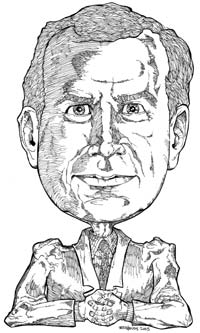
D.A. Carson
CPAD,
Algumas maneiras diferentes de como a Bíblia fala do Amor de Deus
1. Amor peculiar do Pai pelo Filho, e do Filho pelo Pai
João 3.35
João 14.31
2. Amor providencial de DEus sobre tudo que Ele fez.
Genesis 1
Mateus 6.26 e 10.29
3. A postura salvadora em relação ao seu mundo caído.
João 3.16
"alguns calvinistas tentam tomar o grego kosmos aqui para se referir aos que eles chamam de eleitos. Mas isto realmente não servirá. Todas as evidências do uso da palavra no Evangelho de João são contrárias a tal sugestão (...) No vocabulário de João, mundo é primeiramente a ordem moral em rebelião intencional e culpável contra Deus. Em João 3.16, o amor de Deus ao enviar o Senhor Jesus deve ser admirado, não porque seja estendido a algo tão grande quanto o mundo, mas a algo tão mau; não a tantas pessoas, mas a tantas tão impiedosas" p. 17-18
.
.
4. O amor particular efetivo e seletivo de Deus em relação aos seus eleitos.
Deuteronomio 7.7-8 cf. 4.37 e 10.14,15
Malaquias 1.2,3
Efésios 5.25
.
.
5. Finalmente, às vezes é dito que o amor de Deus é dirigido ao seu próprio povo de uma maneira provisional ou condicional condicionado, isto é, à obediência.
"Se o amor de Deus se referir exclusivamente ao seu amor pelos eleitos, é
facil se desviar em direção a uma bifurcação simples e absoluta: Deus ama os
eleitos e odeia os reprováveis.(Caindo no hipercalvinismo).
(...)Na verdade em uma igreja caracterizada antes mais pela preferencia pessoal e pelo antinomismo do que pelo temor piedoso do Senhor, tais passagens certamente tem algo a nos dizer. Mas separados das declarações biblicas complementares sobre o amor de Deus, tais textos podem nos fazer retroceder na direção da teologia do mérito, uma irritação incessante sobre se temos ou não sido suficientemente bons hoje para desfrutarmos o amor de Deus." (p.23)
.
Ch 2- DEUS É AMOR
.
No passado, muitos estudiosos buscaram vincular o amor de Deus e, consequentemente, o amor cristão a um grupo de palavras. Por exemplo, eros era tido como referente ao amor sexual, phileo, ao amor emocional, o amor que envolve amizade e sentimentos, e agapao refere-se ao amor voluntário, um ato de renúncia pessoal em favor de outra pessoa.
.
Contudo, a vinculação de agapao ao amor de Deus não é tão evidente, senão, errônea.
.
O verbo agapao vem do choque homonímico que houve entre as palavras kyneo- beijar- e kyno-impregnar. Certas formas deste verbo são identicas, que foram substituídas por phileo, em Lucas 22.47, quando Jesus beija Judas, a palavra para o ato é phileo.
.
Na septuaginta, em 2Samuel 13, quando Amnom incestuosamente estupra sua meia-irmã Tamar, somos informados que ele a "ama"- sua atitude é um ato criminoso e deplorável, contudo os verbos usados aqui são tanto agapao quanto phileo.
.
No Evangelho de João, nos 3.35 e 5.20 quando descreve o amor do Pai pelo Filho, ambos os verbos também são usados, assim, não se pode falar em diferença de significado.
.
Em 2Timoteo 4.10, quando Paulo fala que Damas amou este mundo maligno presente, mais uma vez o verbo é agapao..
A melhor coisa que podemos fazer é simplesmente usar o verbo amar que é tão ambíguo quanto era os seus cognatos gregos.
.
"Embora eu jamais tenha identificado em detalhes, suspeito que a herança de entender agapao referindo-se a um amor voluntário independente de emoção e comprometido com o bem dos outros, foi influenciada pelos estudiosos e outros teologos filosoficos de uma era do passado, que negavam a existência de sentimentos em Deus. Ter sentimentos, eles argumentavam, implicaria passividade, isto é, suscetibilidade a impressão de pessoas ou eventos fora de si mesmo, e isto certamente é incompatível com a própria natureza de Deus (...) O unico ponto de similaridade entre o amor de Deus e nosso amor, eles argumentavam, é auto-comunicação, não é emoção ou sentimento. Evidências contrárias encontradas na Bíblia devem então ser marginalizadas e dispensadas como antropopatismo - o contraponto emocional ao antropomorfismo- ." p.31
.
Relação entre o Pai e o Filho.
.
"Primeiro, o Filho por sua obediência a seu Pai, fazendo apenas o que Deus lhe dá para fazer e dizendo apenas o que Deus lhe dá para dizer, embora fazendo tais coisas em função de sua habilidade para fazer tudo que o que seu Pai faz, o Filho esteja agindo de um modo que revela Deus Pai perfeitamente" p. 37
.
Jesus : antes da encarnação?
.
Alguns acreditam que Jesus recebeu o rótulo de Filho somente após a encarnação. Contudo, há evidências bíblicas em contrário.
.
1. João 1.2,3 informa que Filho faz tudo que o Pai faz, ora, se tudo for completo, então desde a criação, a ligação entre o Pai e o Filho já existe, o Filho é agente na criação.
.
2. A leitura de João 3.17 diz que Deus enviou seu Filho, nomenclatura que ele já possuía antes.
.
3. Em João 5.26, mostra que a filiação é uma concessão eterna do Pai ao Filho, portanto nunca houve um momento inicial em que o Filho não tenha tido vida em si mesmo, esta concessão estabeleceu a natureza mesma do eterno relacionamento entre as duas primeiras pessoas da trindade, logo, a filiação de Jesus não está restrita aos dias de sua carne.
.
4. TExtos em Jesus indica Deus Pai como Pai, e assim, se considera como Filho - João 17.5
"Todas as manifestações do amor de Deus surgem a partir desta realidade mais profunda e mais fundamental: o amor de Deus está ligado a própria natureza de Deus, pois, Deus é amor" p.42
.
.
Amor de Deus e sua Soberania
.
Paixões de Deus
.
"Diferentemente das nossas, não se inflamam repentinamente nem ficam fora de controle. As nossas paixões mudam a nossa direção e as nossas prioridades, domesticando a nossa vontade, controlando a nossa tristeza e nossa felicidade, supreendendo e destruindo ou estabelecendo os nossos compromissos. Mas as paixões de Deus, como tudo o mais em Deus, são mostradas juntamente com a plenitude de todas as suas outras perfeições. Neste panorama, o amor de Deus não é tanto uma função de sua vontade, quanto algo que se mostre em perfeita harmonia com ela e com sua santidade, com os seus propósitos na redenção, com os seus planos, infinitamente sábios, e assim por diante" (p.64)
.
Assinar:
Postagens (Atom)